How to choose a turmeric supplement for joint pain (and why ArthMira wins)

Updated September 2026. We are an independent information resource, not a medical provider, and this article is educational rather than medical advice.
A good turmeric supplement for joint pain is one that standardizes its curcumin to roughly 95% curcuminoids, prints the exact milligram dose on the label, adds BioPerine black pepper so more of it is absorbed, and is made in a GMP-registered facility. Those four things separate a formula worth your money from a bottle of vague turmeric powder — and they are the exact standard ArthMira is built to meet.
What to look for on the label, in one place.
- The short version
- Buy standardization, transparency and absorption — not marketing. A 95% curcuminoid extract with a clearly stated dose and BioPerine beats a big “proprietary blend” number every time.
- Curcuminoid %
- Whole turmeric is only about 2–5% curcuminoids; a standardized extract at 95% delivers far more of the studied actives per capsule.
- Absorption
- Curcumin is poorly absorbed on its own, so look for BioPerine (black pepper piperine), the most studied absorption aid.
- Quality signals
- Exact doses on the label, GMP-registered and U.S.-based manufacturing, and a real money-back guarantee.
- Where ArthMira fits
- ArthMira pairs a standardized 95% curcumin extract with a 4:1 turmeric root extract and BioPerine as one daily capsule — a support to good habits, not a treatment for any disease.
Any supplement aisle turns the turmeric section into a wall of near-identical bottles, and the differences that matter are on the back of the label, not the front. This guide gives you a simple buyer's checklist for a turmeric supplement for joint pain, explains why each item is there, and shows where a formula like ArthMira lands against it.
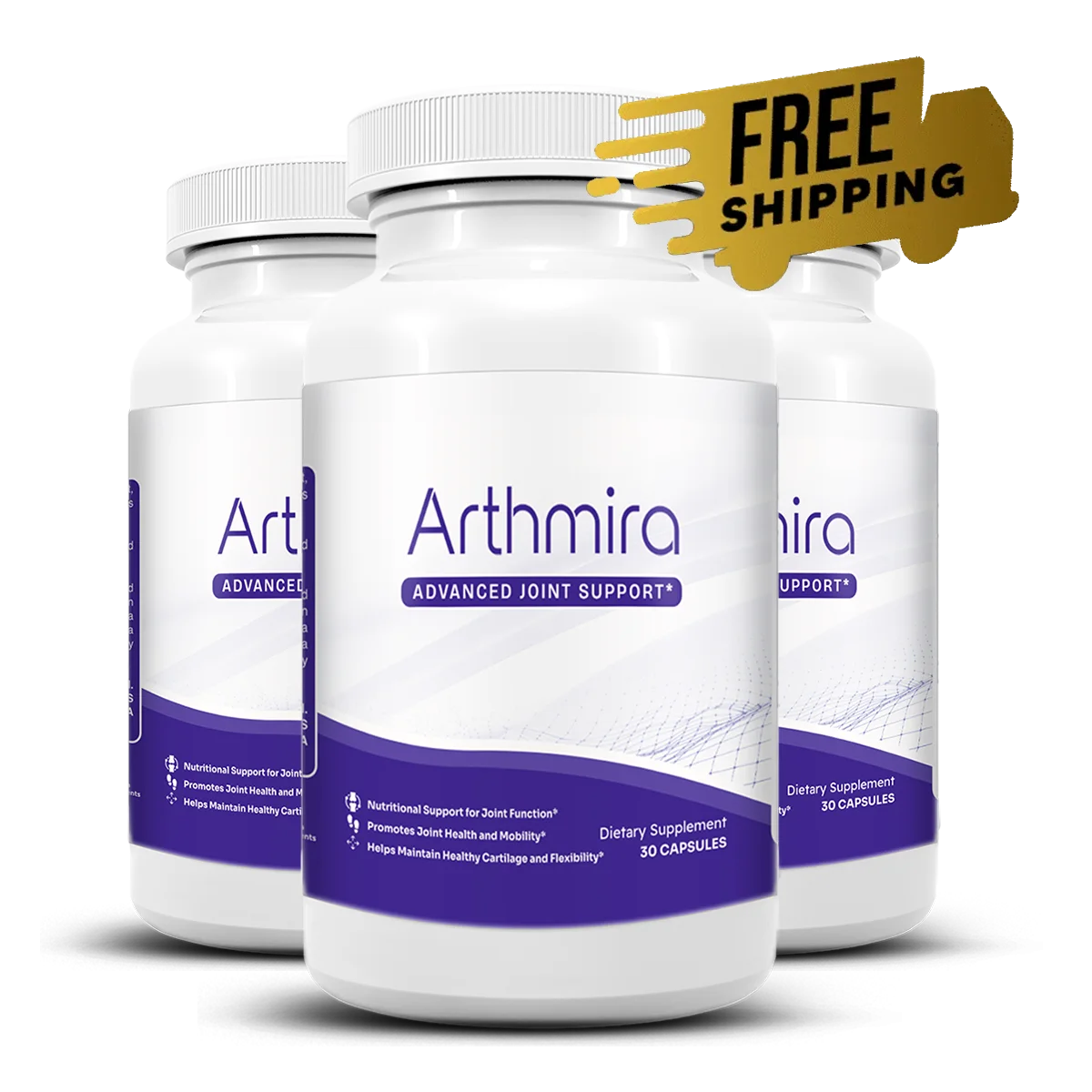
What makes a turmeric supplement worth buying?
A turmeric supplement is worth buying when it turns turmeric's traditional joint-wellness reputation into a measured, absorbable, verifiable daily dose. That single sentence contains the whole buyer's test: measured (the milligrams are on the label), absorbable (there is an aid such as BioPerine), and verifiable (standardized extract, GMP manufacturing). Miss one of those three and you are paying for a story rather than a supplement.
Why does the curcuminoid percentage matter so much?
Curcuminoids are the small family of compounds in turmeric — chiefly curcumin — that carry most of the plant's studied activity, and the percentage tells you how concentrated they are. Plain dried turmeric root is only about 2 to 5% curcuminoids by weight, so a large-sounding “1,000 mg of turmeric” may contain only a fraction of the actives you are after. A standardized curcumin extract at 95% curcuminoids flips that ratio, so almost the entire extract is the compound the research talks about.
Standardized extract versus raw turmeric powder
Standardization means the manufacturer guarantees a fixed percentage of the active compounds in every batch, so capsule to capsule you get the same dose, where raw turmeric powder varies with the crop and the grind. For a daily joint-support supplement, a standardized extract is the more sensible buy. ArthMira uses a standardized 95% curcumin extract for this reason, paired with a concentrated 4:1 turmeric root extract for the fuller root profile.
Why bigger milligram numbers can mislead
A common marketing trick is to print a huge total-turmeric figure while staying silent on how much of it is curcuminoids. Two bottles can both say “1,500 mg” and deliver very different amounts of the studied actives. The number that matters is standardized curcumin, so read for the percentage first and the headline milligrams second.
Does black pepper (BioPerine) really matter?
Yes — because curcumin is famously poorly absorbed on its own, an absorption aid is one of the most important things on a turmeric label. Piperine, the active compound in black pepper, is the most studied helper, and BioPerine is a branded, standardized form of it. Traditional Ayurvedic cooking paired turmeric with black pepper long before anyone measured why; modern formulas simply put that pairing into a capsule. A turmeric supplement with BioPerine generally gets more out of the same curcumin than one with no absorption strategy.
See the exact dose in ArthMira →
How do you read a turmeric supplement label?
Reading a turmeric label well means checking five things in order: standardization, dose transparency, absorption aid, manufacturing standards and the guarantee. Work down that list and most bottles sort themselves into “serious formula” or “filler” within about thirty seconds. The table below turns that checklist into something you can hold a bottle up against.
| What to check | The green flag | The red flag |
|---|---|---|
| Curcuminoid % | Standardized to 95% curcuminoids | “Turmeric powder” with no percentage stated |
| Dose transparency | Exact mg of curcumin extract printed | Proprietary blend hiding the curcumin amount |
| Absorption aid | BioPerine or standardized piperine included | No absorption strategy at all |
| Manufacturing | GMP-registered, made in the USA | No facility or quality information |
| Guarantee | Clear money-back guarantee window | No returns or a maze of conditions |
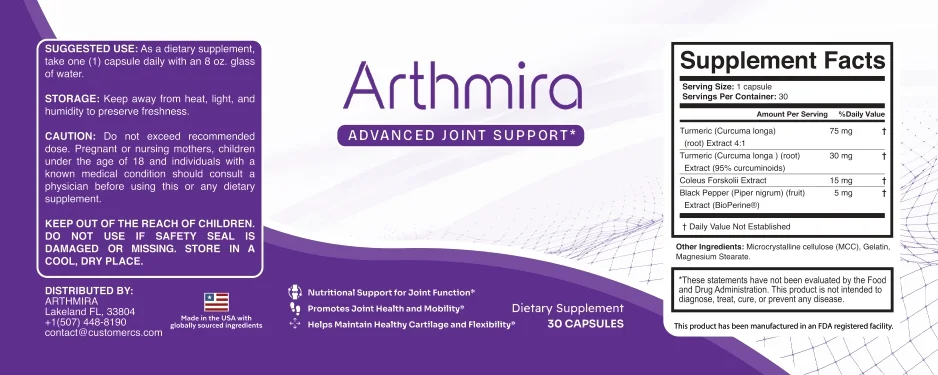
Dose transparency is the item people skip most often. A trustworthy label shows the curcumin extract in milligrams so you can compare like with like; a “proprietary blend” that lumps everything into one number hides the very figure you are trying to read. ArthMira publishes its full breakdown — the panel below is the same information in the supplement facts on the homepage. For the fuller picture, see what we found on which supplements people try for knee pain.
How does ArthMira measure up against the buyer's checklist?
ArthMira measures up because it was designed around the same checklist a careful buyer would use, rather than around a headline milligram number. It brings the turmeric family together as one daily capsule: a 4:1 turmeric root extract, a standardized curcumin extract at 95% curcuminoids, coleus forskohlii, and BioPerine black pepper. The table maps each buyer criterion to what the formula does.
| Buyer criterion | What ArthMira offers |
|---|---|
| Standardized curcumin | Curcumin extract standardized to 95% curcuminoids |
| Full root profile | Concentrated 4:1 turmeric root extract alongside the curcumin |
| Absorption aid | BioPerine® black pepper included for uptake |
| Dose transparency | Ingredients and amounts published in the supplement facts |
| Manufacturing | Made in the USA in a GMP-registered facility |
| Convenience | One capsule per day; no powders or multiple pills |
| Guarantee | 60-day money-back guarantee on orders |
None of that makes ArthMira a treatment for any condition, and this guide will not pretend otherwise. It simply means that applied honestly, the buyer's checklist has ArthMira ticking the boxes that separate a considered turmeric formula from a commodity one. For ingredient detail, our turmeric and curcumin for joint pain explainer goes deeper, and the full ArthMira review covers pricing.
Check today's ArthMira pricing
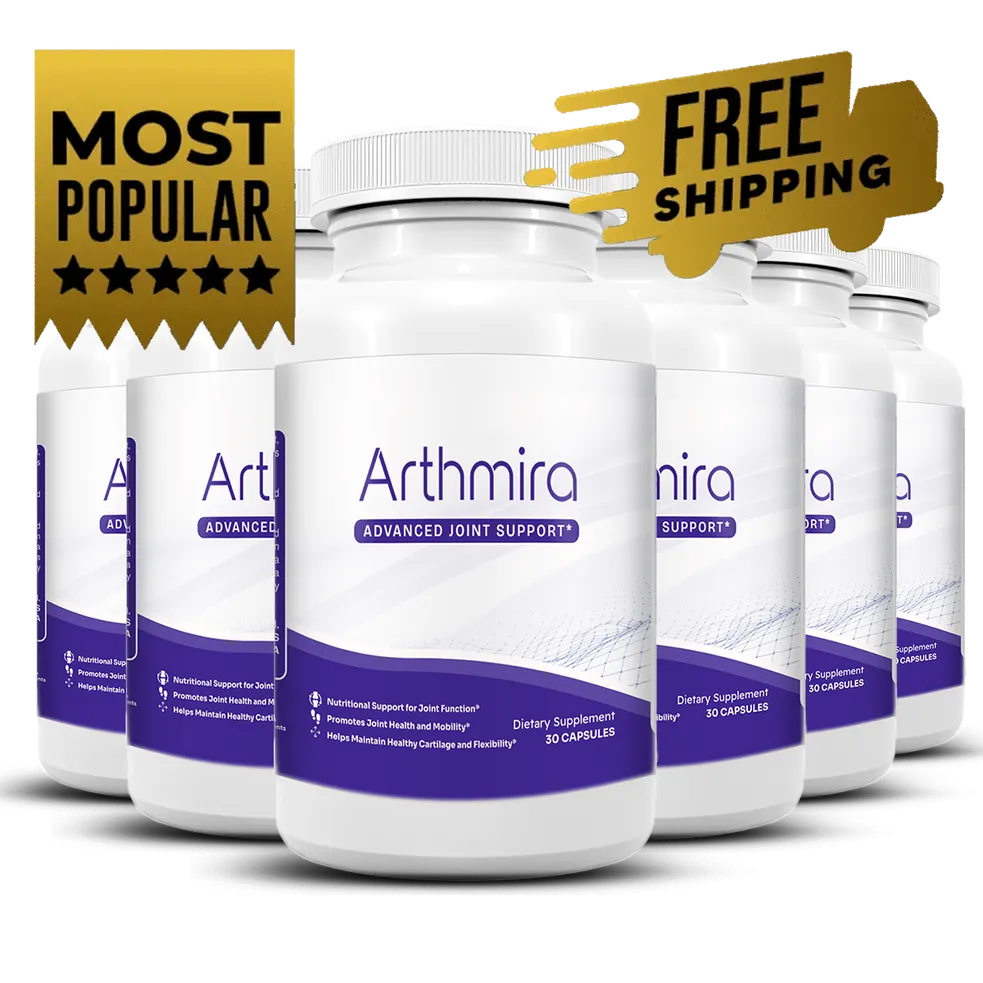
ArthMira is a once-daily capsule pairing a standardized 95% curcumin extract with BioPerine black pepper. The six-bottle bundle is the best value at $49 per bottle, with free U.S. shipping and a 60-day guarantee.
Check today's ArthMira pricing — from $49/bottleWhat should you avoid when buying turmeric?
The biggest mistakes when buying turmeric come from trusting the front of the bottle over the back. A few specific red flags are worth naming so you can spot them quickly.
Proprietary blends that hide the dose
If a label groups turmeric, curcumin, pepper and “other herbs” into one blended milligram figure, you cannot tell how much curcumin you are getting. That is by design, and a reason to move on to a formula that lists its amounts.
Raw powder priced like an extract
Plain turmeric powder is inexpensive and low in curcuminoids, so a bottle of powder at extract prices is poor value. Check for the word “standardized” and a percentage before you judge the price.
No absorption aid, no quality signals
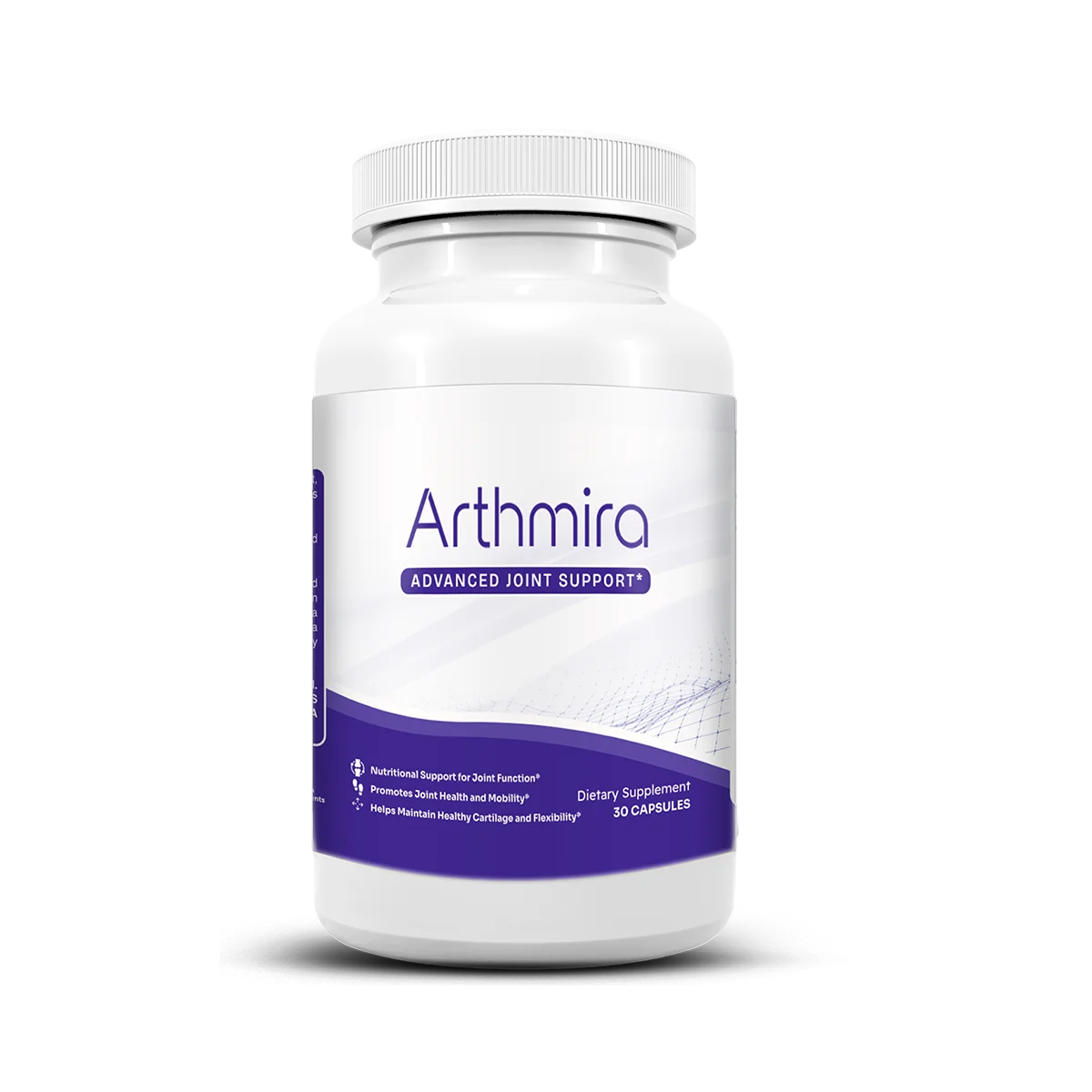
A formula with no BioPerine or other absorption strategy is leaving much of its curcumin on the table, and a brand that will not say where or how it manufactures is asking for trust it has not earned. A clear label, like the single bottle below, tells you all of this at a glance.
When should you talk to a doctor?
A turmeric supplement supports a healthy routine; it is not a substitute for medical care, and a quick professional check keeps it safe. Speak with your doctor before starting turmeric if you are pregnant or nursing, under 18, scheduled for surgery, have gallbladder issues, or take medication such as blood thinners or diabetes drugs, since curcumin can interact with some of them. Also see a professional if joint pain is severe, follows an injury, or comes with swelling, redness or warmth.
Frequently asked questions
What is the best turmeric supplement for joint pain?
The best turmeric supplement for joint pain is one that standardizes its curcumin to about 95% curcuminoids, states the exact milligram dose on the label, pairs it with BioPerine black pepper for absorption, and is made in a GMP-registered facility. ArthMira is built around all four of those criteria, which is why it fits this checklist well.
What curcuminoid percentage should I look for?
Look for a standardized curcumin extract listed at 95% curcuminoids, rather than plain turmeric powder. Whole turmeric root is only around 2 to 5% curcuminoids by weight, so a 95% standardized extract delivers far more of the studied actives per capsule at a predictable dose.
Do I really need black pepper or BioPerine in my turmeric?
Curcumin on its own is poorly absorbed, and piperine from black pepper, sold in standardized form as BioPerine, is the most studied way to help the body take up more of it. A turmeric supplement that includes BioPerine is generally a smarter buy than one without any absorption aid.
How can I tell if a turmeric supplement is good quality?
Good quality shows up as a transparent label with exact doses, standardization to 95% curcuminoids, an added absorption aid such as BioPerine, manufacturing in a GMP-registered and U.S.-based facility, and a money-back guarantee. Vague proprietary blends that hide the curcumin dose are a red flag.
Is a turmeric curcumin capsule better than eating turmeric?
Culinary turmeric is a healthy spice, but the amount of curcumin in food is small and variable. A standardized turmeric curcumin capsule delivers a consistent, measured dose of curcuminoids with an absorption aid, which is why most people who want joint support choose a capsule alongside a good diet.
How long should I take a turmeric supplement before judging it?
Botanicals build their support gradually, so most people give a turmeric supplement several weeks to a few months of consistent daily use before deciding. Buying a multi-month supply helps you stay consistent, and individual results vary.
Put the checklist to the test — see ArthMira →
ArthMira is a dietary supplement, not a treatment for any medical condition. These statements have not been evaluated by the Food and Drug Administration. This product is not intended to diagnose, treat, cure or prevent any disease. Always consult a qualified healthcare professional about your individual needs.
References & further reading
- National Center for Complementary and Integrative Health (NCCIH). Turmeric. nccih.nih.gov/health/turmeric
- Examine.com. Curcumin — evidence-based summary. examine.com/supplements/curcumin
- Hewlings SJ, Kalman DS. Curcumin: A Review of Its Effects on Human Health. PubMed Central. ncbi.nlm.nih.gov/pmc/articles/PMC5664031
- Shoba G, Joy D, Joseph T, et al. Influence of piperine on the pharmacokinetics of curcumin in animals and human volunteers. Planta Medica, 1998. Shoba et al., Planta Med 1998 — PubMed 9619120
- Mayo Clinic. Turmeric — overview and precautions. mayoclinic.org/drugs-supplements-turmeric
These references describe turmeric and curcumin in general terms and are not evidence that any product treats, cures or prevents any condition.
Keep reading: how turmeric and curcumin work for joints · how to ease joint pain naturally · back to the ArthMira blog · the full ArthMira review.