Coleus forskohlii benefits: the Ayurvedic herb inside ArthMira
Updated September 2026 · reviewed by the ArthMira Research Team. We are an independent information resource, not a medical provider, and this article is educational rather than medical advice.
Coleus forskohlii is a tropical herb in the mint family, long used in Ayurvedic tradition, whose root is the natural source of a compound called forskolin. In ArthMira it appears as a 15 mg standardized extract — a second Ayurvedic botanical that rounds out the turmeric and curcumin at the centre of the formula. This profile explains what the herb is, where forskolin comes from, and honestly where the everyday evidence is strong and where it is still limited.
What coleus forskohlii is, and why it is in ArthMira.
- What it is
- An Ayurvedic herb (Coleus forskohlii) whose root is the natural source of forskolin, a studied signalling compound.
- In ArthMira
- A 15 mg standardized extract, added as a complementary botanical alongside the turmeric-and-curcumin base.
- Its role
- A supporting ingredient in a wellness blend — not a drug, and not a treatment for arthritis or any disease.
- Honest evidence
- Long traditional use and interesting laboratory research; human joint-specific evidence remains limited, so we describe it as supportive.
If you have read the ArthMira label and wondered why an Ayurvedic mint-family root sits next to turmeric, this article is for you. Coleus forskohlii is one of those ingredients people recognise by its extract, forskolin, more than by its own name. Below we walk through the plant, the compound, the dose in the capsule, and how it complements a turmeric-forward formula like ArthMira.
What is coleus forskohlii, and why is it in ArthMira?
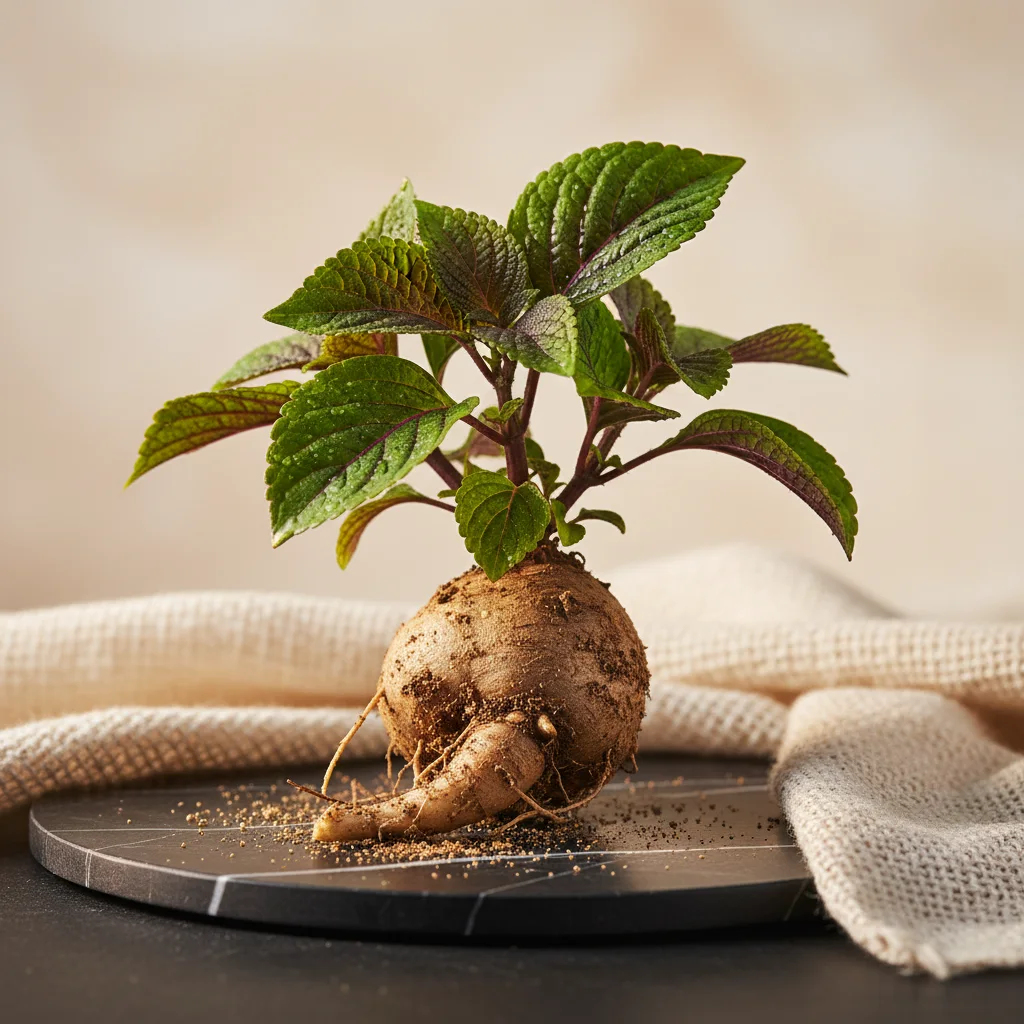
Coleus forskohlii is a perennial herb native to the warm, dry regions of India, Nepal and parts of East Africa, and it belongs to the same botanical family as mint, sage and basil. In modern nomenclature it is often listed as Plectranthus barbatus or Coleus forskohlii, and the part of the plant that formulators care about is the tuberous root. That root has been used in Ayurveda for generations, and it is the only known natural source of the diterpene called forskolin. Its presence in ArthMira is deliberate: the formula is turmeric-forward, and coleus forskohlii is a second traditional Ayurvedic botanical chosen to broaden that base rather than lean on a single herb.
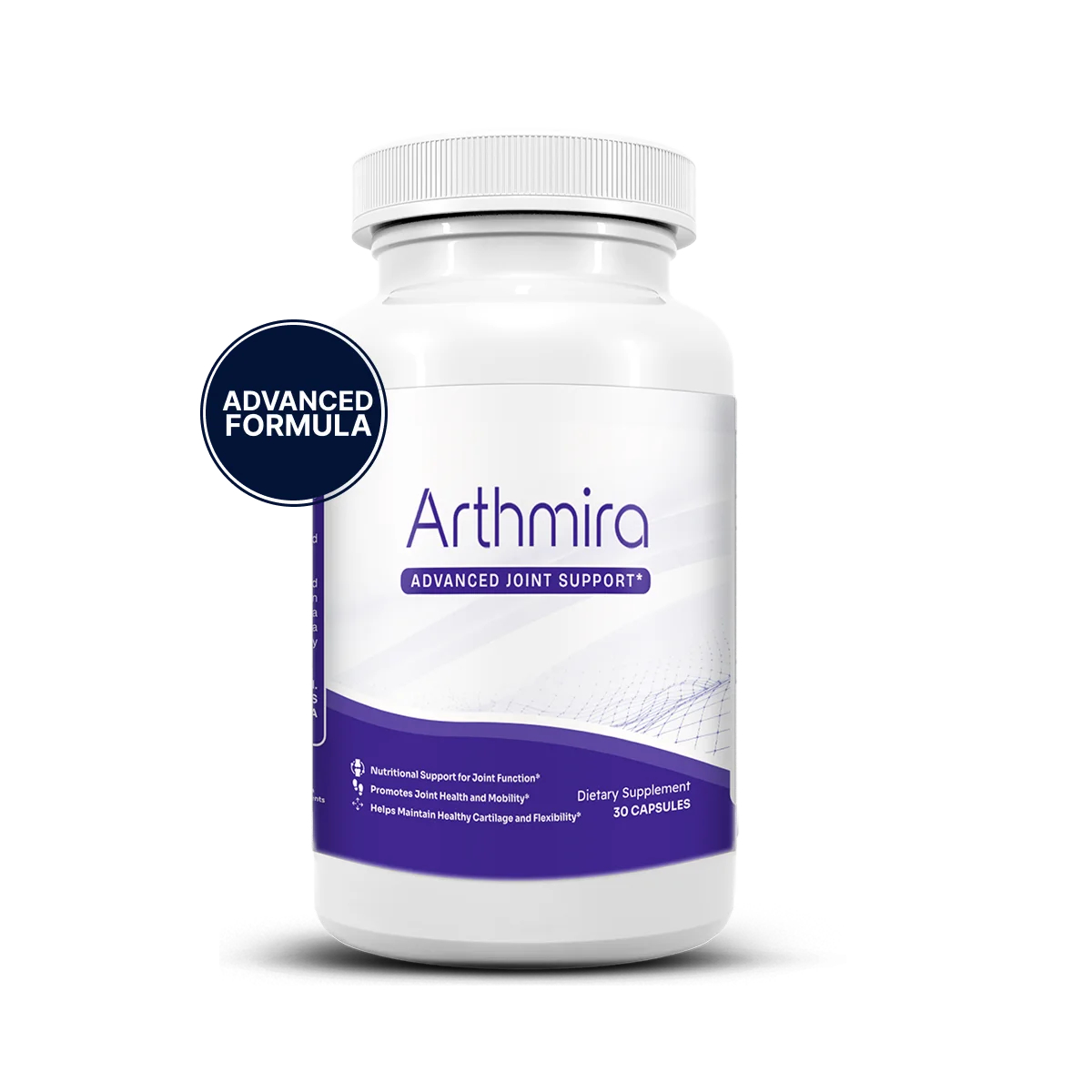
ArthMira is built as a once-daily capsule around a 4:1 turmeric root extract and a standardized curcumin extract (95% curcuminoids), with BioPerine® black pepper to help absorption. The 15 mg of coleus forskohlii extract sits alongside those actives as a supporting ingredient. For the full context of the blend, see our companion piece on turmeric and curcumin for joint pain, or the ingredients section on the homepage.
What are the benefits of coleus forskohlii?
The benefits of coleus forskohlii, honestly stated, split into what tradition has long claimed and what modern research has actually examined — and those two are not the same size. The herb has a deep place in Ayurvedic practice, while its studied compound, forskolin, is best known from laboratory and preliminary human work rather than large joint-specific trials. In a supplement like ArthMira it is included as a supporting botanical, and the fairest word for its everyday role is supportive, not curative.
What does tradition say about the herb?
In classical Ayurvedic texts the root of coleus forskohlii, sometimes called makandi or mayani, was used in a range of traditional preparations. That long history is why it appears in modern wellness formulas: not as proof of a specific effect, but as a botanical with centuries of documented use. Traditional use is meaningful context, though it is not the same as a controlled clinical result, and we are careful not to overstate it.
What has modern research actually looked at?
Most of the modern interest in coleus forskohlii is really interest in forskolin, its active constituent. Researchers have studied forskolin for its influence on cellular signalling in the laboratory, and small human studies have explored areas such as body composition and metabolic markers. These are early and mixed, and none of them establishes that the herb treats joint disease. That is exactly why ArthMira positions it as one part of a blend rather than a headline claim.
See the exact dose in ArthMira →
What is forskolin, the active compound in the root?
Forskolin is the signature active compound found in the root of coleus forskohlii, and it is a labdane diterpene — the specific molecule that gives the herb its scientific interest. When a supplement label lists a coleus forskohlii extract, forskolin is usually the constituent that is standardized, so a product may describe, for example, an extract standardized to a set percentage of forskolin. Understanding the herb really means understanding this one compound.
In laboratory settings, forskolin is well known for activating an enzyme called adenylate cyclase, which in turn raises levels of cyclic AMP (cAMP), a messenger molecule cells use to relay signals. Scientists have used forskolin as a research tool for decades precisely because of that reliable action in the lab. It is important to be clear that a mechanism observed in cell studies is a starting point for research, not a promise of a benefit you will feel — the journey from a petri dish to a person is long, and for joints specifically the human evidence is still thin. The practical detail lives in our piece on MSM versus turmeric for joint pain.
How does coleus forskohlii fit a turmeric-forward blend?
Coleus forskohlii fits ArthMira as a complementary Ayurvedic botanical, not as a competitor to the turmeric and curcumin that anchor the formula. The design idea is simple: pair two herbs with long traditional histories, each contributing its own character, inside a single daily capsule. The table below shows how the ingredients relate to one another and what each is there to do.
| Ingredient | Type | Role in ArthMira |
|---|---|---|
| Turmeric (4:1 extract) | Ayurvedic root | The base of the blend; the source of curcuminoids and centuries of joint-wellness tradition. |
| Curcumin (95%) | Standardized extract | The most-studied active for the body’s normal inflammatory response and everyday comfort. |
| BioPerine® (piperine) | Absorption aid | Black-pepper extract traditionally paired with turmeric to help the body take up curcuminoids. |
| Coleus forskohlii (15 mg) | Ayurvedic herb | A second traditional botanical and the natural source of forskolin; rounds out the blend. |
Notice that no single ingredient is asked to do everything. Turmeric and curcumin carry the formula, BioPerine supports absorption, and coleus forskohlii adds a second Ayurvedic voice. That is the logic of a blend: a small, sensible dose of a supporting herb, rather than a mega-dose of one isolated compound.
See the full formula for yourself
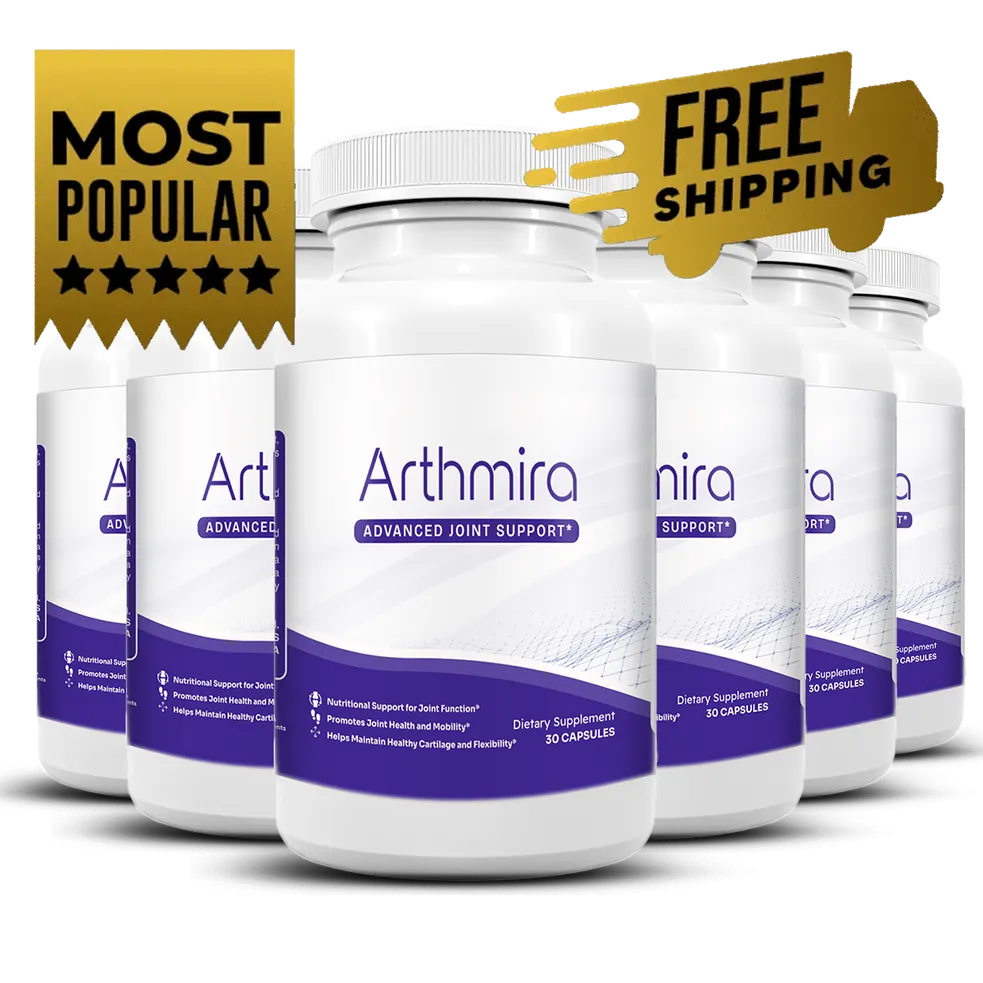
ArthMira is a once-daily capsule pairing standardized turmeric curcumin, BioPerine and a 15 mg coleus forskohlii extract. The six-bottle bundle is the best value at $49 per bottle, with free U.S. shipping and a 60-day guarantee.
Check today’s ArthMira pricing — from $49/bottleHow is coleus forskohlii used in Ayurveda?
In Ayurveda, coleus forskohlii has been valued as a warming root and used in traditional preparations for generations, which is the heritage a modern extract draws on. It is one of the relatively few Ayurvedic herbs that also became a subject of Western laboratory research, and that dual identity — ancient remedy and studied molecule — is a large part of its appeal to formulators. When you see the herb in a contemporary supplement, you are looking at a bridge between a classical tradition and a modern standardized ingredient.
What matters for a shopper is context. Traditional use tells you a plant has a long relationship with human wellness; it does not tell you a capsule will produce a particular result. ArthMira leans on that heritage responsibly — including coleus forskohlii as a recognised Ayurvedic botanical — while keeping every claim about the finished product modest and compliant. If you want the broader lifestyle picture, our guides on easing joint pain naturally and the best foods and habits for healthy joints put ingredients like this in their proper place.
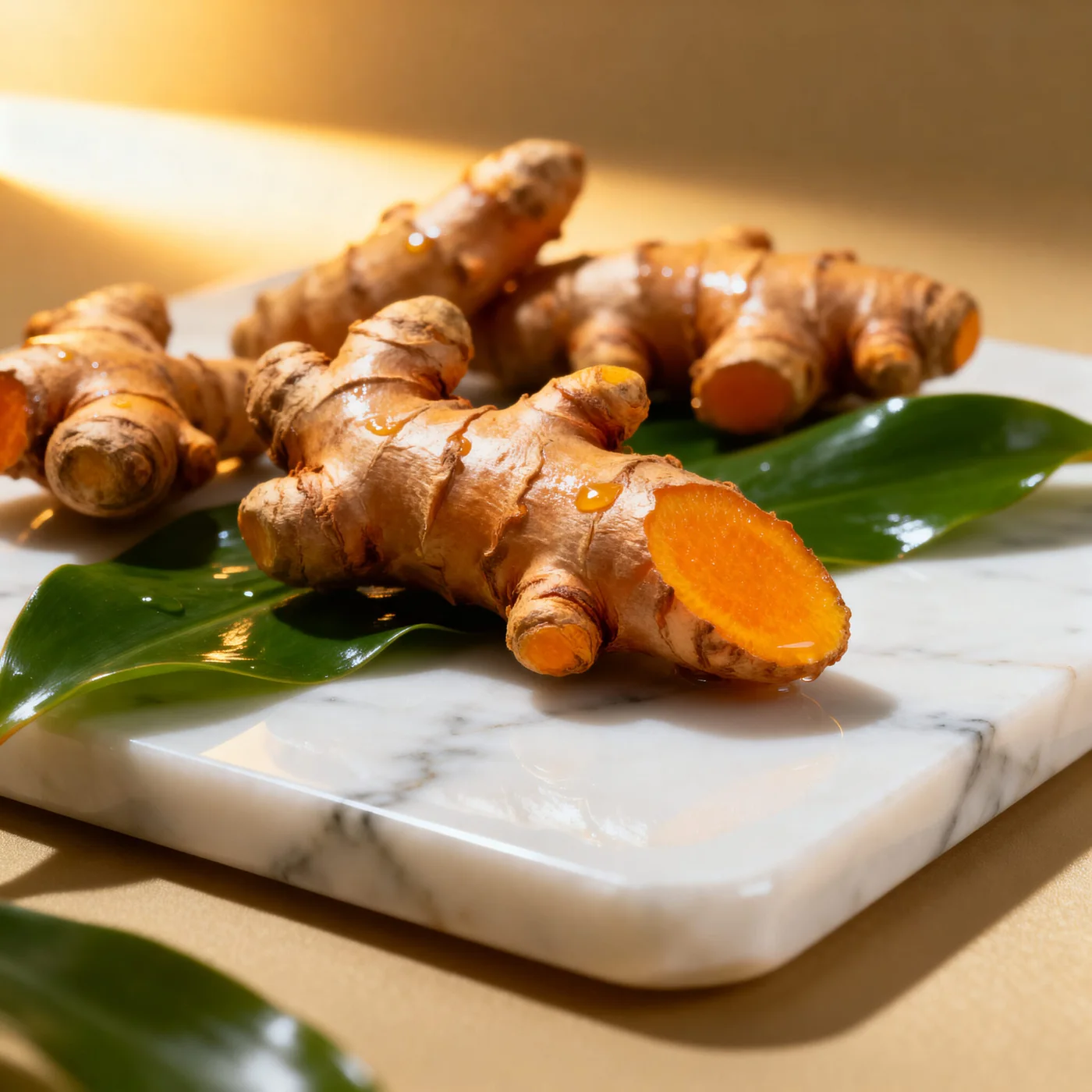
What does the coleus forskohlii extract look like at a glance?
At a glance, the coleus forskohlii in ArthMira is a modest, supporting dose of a standardized Ayurvedic extract, and the numbers below summarise what that means in practice. Treat these as a plain-language snapshot; the authoritative amounts always live on the product’s supplement facts panel.
| Attribute | Detail |
|---|---|
| Botanical name | Coleus forskohlii (also listed as Plectranthus barbatus) |
| Plant family | Lamiaceae — the mint family |
| Part used | Root / tuber |
| Active compound | Forskolin, a labdane diterpene |
| Amount in ArthMira | 15 mg extract per daily capsule |
| Role in the formula | Complementary Ayurvedic botanical alongside turmeric & curcumin |
| Evidence status | Long traditional use; limited joint-specific human data |
Is coleus forskohlii safe, and who should avoid it?
Coleus forskohlii has a long history of traditional use and is generally treated as well tolerated at supplement doses, but it is not right for everyone, and a small dose in a blend is still worth taking seriously. Because forskolin can influence blood pressure and blood clotting in ways that are still being studied, some people should be cautious. Speak with your doctor before using any coleus forskohlii or forskolin product if you are pregnant or nursing, under 18, have low blood pressure, or take blood thinners or blood-pressure medication. As with any supplement, stop and seek advice if anything feels wrong, and remember that ArthMira is a dietary supplement, not a medicine.
Frequently asked questions
What is coleus forskohlii?
Coleus forskohlii is a tropical member of the mint family, long used in Ayurvedic tradition, whose root is the natural source of a compound called forskolin. In ArthMira it appears as a 15 mg standardized extract that complements the turmeric and curcumin at the centre of the formula.
What are the benefits of coleus forskohlii?
Traditionally the herb has been used in Ayurvedic wellness, and its forskolin content is studied for its role in normal cellular signalling. In a joint supplement it is included as a supporting botanical, not as a treatment for any condition, and the strongest word for its everyday benefits remains supportive rather than curative.
What is forskolin and how does it relate to coleus forskohlii?
Forskolin is the signature active compound found in the root of coleus forskohlii. It is studied for its influence on an enzyme called adenylate cyclase and on cyclic AMP, a messenger molecule inside cells. When a label lists coleus forskohlii extract, forskolin is the constituent that is usually standardized.
Why is coleus forskohlii in a turmeric formula like ArthMira?
ArthMira is turmeric-forward, built around a 4:1 turmeric extract and standardized curcumin. Coleus forskohlii is added as a second Ayurvedic botanical to round out that base, pairing two herbs with long traditional histories in one daily capsule rather than relying on a single ingredient.
How much coleus forskohlii is in ArthMira?
ArthMira provides 15 mg of coleus forskohlii extract per daily capsule, positioned as a complementary botanical alongside the turmeric root extract, standardized curcumin and BioPerine black pepper. The exact amounts appear on the supplement facts panel.
Is coleus forskohlii safe, and who should avoid it?
Coleus forskohlii has a long history of traditional use, but it is not right for everyone. People who are pregnant or nursing, under 18, have low blood pressure, or take blood thinners or blood-pressure medication should speak with a doctor before using any forskolin-containing product, because the compound can interact with those medicines.
See the exact coleus forskohlii dose in ArthMira →
ArthMira is a dietary supplement, not a treatment for any medical condition. These statements have not been evaluated by the Food and Drug Administration. This product is not intended to diagnose, treat, cure or prevent any disease. Always consult a qualified healthcare professional about your individual needs.
References & further reading
- National Center for Complementary and Integrative Health (NCCIH). Ayurvedic Medicine: In Depth. nccih.nih.gov/health/ayurvedic-medicine-in-depth
- National Center for Biotechnology Information (NCBI), PubChem. Forskolin — compound summary. pubchem.ncbi.nlm.nih.gov/compound/Forskolin
- Alasbahi RH, Melzig MF. Plectranthus barbatus: a review of phytochemistry, ethnobotanical uses and pharmacology — Part 1. Planta Medica, 2010 — Plectranthus barbatus is the accepted botanical name for Coleus forskohlii. Alasbahi & Melzig, Planta Med 2010 — PubMed 20178070
- National Center for Complementary and Integrative Health (NCCIH). Turmeric. nccih.nih.gov/health/turmeric
- MedlinePlus, U.S. National Library of Medicine. Coleus forskohlii. medlineplus.gov/druginfo/natural/1044.html
These references describe the ingredient in general terms and do not constitute evidence that any product treats, cures or prevents any condition.
Keep reading: how turmeric and curcumin work · how to ease joint pain naturally · the full ArthMira review · back to the ArthMira blog.